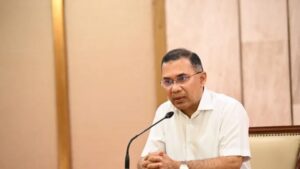
A humane Bangladesh cannot be built by depriving children of their childhood and pushing them into labour, Chattogram Deputy Commissioner Mohammad Zahidul Islam Mian said on Monday, urging a coordinated effort by the government, industries, families and society to eliminate child labour.
“If a child grows up beside the heat of a factory or in an unhealthy workplace from birth, that child never learns to dream. And a child who has never learned to dream cannot inspire the nation with new dreams,” he said while presiding over a discussion marking the World Day Against Child Labour 2026 at the Chattogram Circuit House.
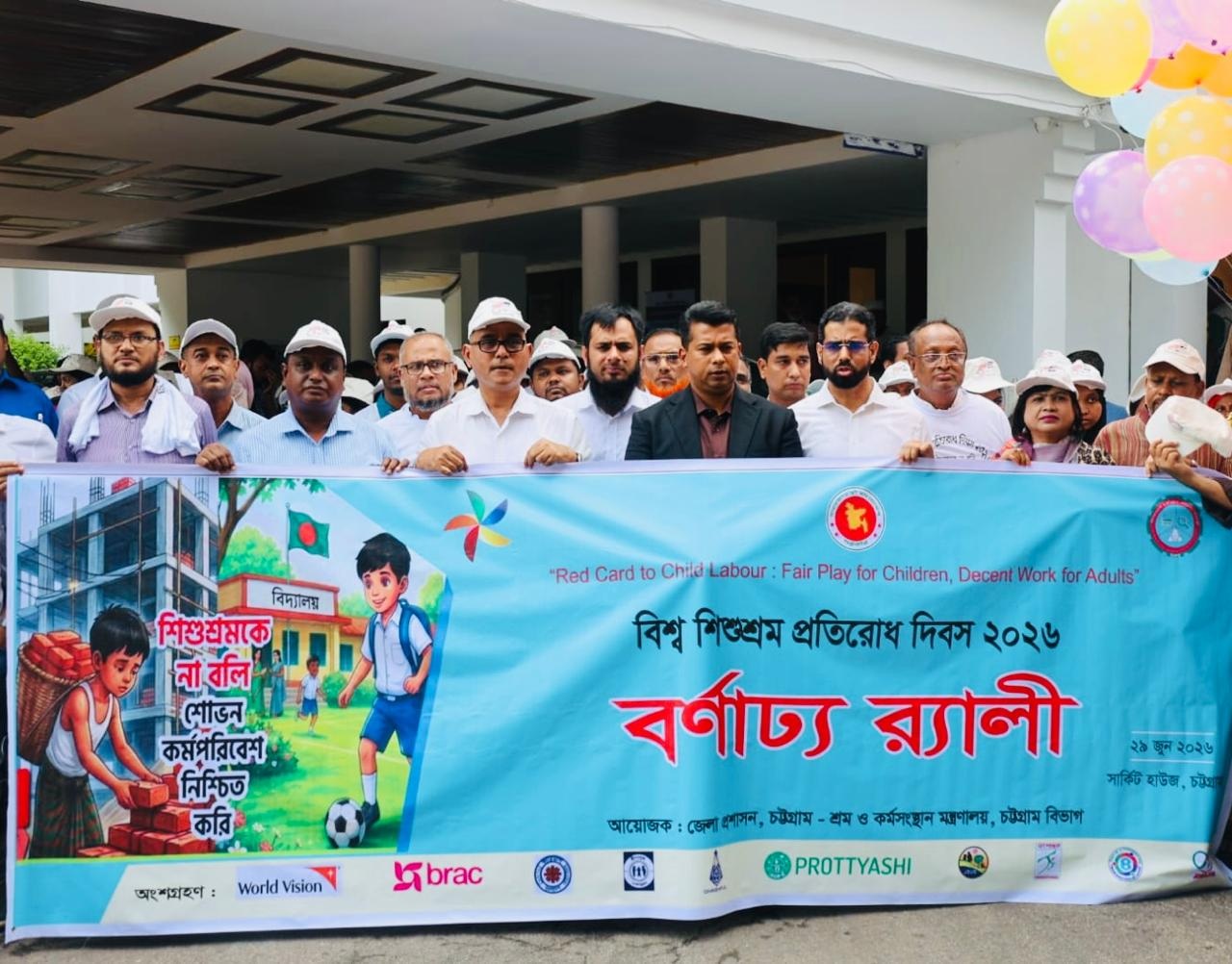
The programme, organised by the Department of Inspection for Factories and Establishments (DIFE), was preceded by a rally. This year’s theme was: “Say No to Child Labour, Ensure Decent Working Conditions.”
Describing child labour as more than a labour law issue, Zahid said it robs children of their childhood, education and human development, ultimately undermining the country’s future.
“Every stage of life has its own beauty. Childhood is meant for learning, imagination and growth. Taking that away through child labour makes it impossible to build a humane, value-based and safe Bangladesh,” he said.
He said government initiatives, particularly the Family Card programme, could help reduce the economic pressures that often force children into work, expressing hope that beneficiary families would use the support to keep their children in school.
Addressing industrialists, the DC said Bangladesh’s industries had grown on the hard work of workers, and employers therefore had a moral responsibility to improve workers’ living standards and ensure better opportunities for their children.
He also urged society not to view poverty as the only reason behind child labour, saying children need an environment where they can attend school, play, listen to stories from their grandparents and learn to dream.
“The country’s future leadership is being shaped by today’s children. But if they spend their childhood in factories, brick kilns or other hazardous workplaces, they lose the opportunity to realise their full potential,” he said.
Using an analogy, Zahid said, “You cannot ask a fish to climb a tree.” Likewise, he added, forcing children into hazardous work beyond their age and ability can never produce a developed nation.
He stressed that eliminating child labour requires collective action involving the government, employers, labour organisations, teachers, parents, journalists, development partners and the wider community.
Referring to a talented child named Zobaida during the discussion, the DC announced that the district administration would support her education and called on affluent members of society to help other disadvantaged but promising children.
He also urged business owners not to sacrifice children’s futures for short-term profits and to employ qualified adults instead of children.
“No one can prosper alone. Our greatest strength lies not in power, but in humanity and conscience,” he said.
The DC said child labour had already been eliminated from several of the country’s 43 hazardous sectors for children. Efforts are now underway to make the plastic manufacturing and brick kiln sectors completely child labour-free by next year, alongside continued initiatives in other hazardous industries.
Among others, Additional Deputy Commissioner (Education and ICT) Pathan Md Saiduzzaman, BGMEA Director Enamul Aziz Chowdhury, senior government officials, representatives of law enforcement agencies, employers’ and workers’ organisations, development partners, child rights activists and journalists attended the programme.