New uncertainty and complexity have emerged in India-US bilateral relations as a US bill imposing tariffs of up to 100% on countries continuing to purchase Russian oil and gas awaits Donald Trump’s signature.
According to a report by the Hindustan Times on Friday (18 September), the US Congress passed the ‘Graham-Lindsey Sanctioning Russia and Iran Act of 2026’. US President Donald Trump is currently in the process of signing the bill. As India is one of the main buyers of Russian crude oil, this law has become a major obstacle in diplomatic relations between the two countries.
White House officials stated that while President Trump is willing to sign the bill, it remains unclear how he will exercise this authority against India or what level of tariff will be imposed. The bill contains provisions for tariffs up to a maximum of 100%. The primary responsibility for setting these tariff rates will rest with US Trade Representative Jamieson Greer.
Data from the Center for Research on Energy and Clean Air shows that in June, India’s Russian oil imports surged by 34% compared to the previous month, reaching 4.5 billion euros. This amount accounts for nearly 36% of Russia’s total exports, making India the second-largest buyer of Russian oil in the world after China.
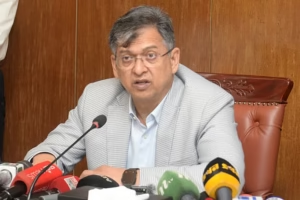
Intense diplomatic discussions are underway between Indian and US officials regarding this alarming situation. India’s Ministry of External Affairs stated that they have delivered a clear message to the US delegation regarding the potential impact of the bill. Bilateral meetings may take place over the coming weeks, and Indian External Affairs Minister S. Jaishankar is expected to visit the US three times in the next three months.
This new sanctions bill has further complicated bilateral trade negotiations between the two nations. New Delhi had been demanding commitments from Washington to ensure a competitive advantage for Indian products over other Asian economic rivals in the US market. However, that advantage is now threatened due to the new legal measure.
Earlier, Washington imposed a 10% tariff on India over allegations of forced labor. Furthermore, India faces the risk of additional tariffs due to an ongoing US investigation into excess capacity, making it difficult to maintain a favorable market position compared to regional rivals, including Pakistan.
The passage of the bill in the US Congress sparked mixed reactions internationally. China rejected the unilateral US sanctions as contrary to international law, while a Kremlin spokesperson described it as an “unfriendly act.”
Conversely, Ukrainian President Volodymyr Zelensky welcomed the move as a “very powerful tool” to stop the ongoing war. Additionally, European Commission President Ursula von der Leyen described the proposed bill as a “pivotal opportunity.”