Chaos and dysfunction exist at every level of our society now – among ordinary people, as seen on the roads, and among the powerful elite and lawmakers, in what may be called the realm of royalty. In present-day Bangladesh, disorder seems no longer an exception; it has become a pattern. It is visible on the streets, in institutions, and even in the highest corridors of power. The phrase “from road to royalty” captures this painful reality: chaos stretches from the ordinary citizen’s daily life to the conduct of the elite.
The roads of Bangladesh are perhaps the most visible theatre of disorder. Traffic laws are often treated as mere suggestions rather than binding obligations. Reckless driving, illegal overtaking, driving against the flow of traffic, roads crowded with auto-rickshaws and rickshaws operating without legal documents, bikers’ blatant disregard for traffic regulations, and unregulated public transport, especially buses and so-called legunas, have turned the streets into zones of constant uncertainty. To make matters worse, reckless pedestrians add to the chaos, while footpaths and even major portions of the roads are frequently occupied by unauthorised hawkers. The traffic police and electronic traffic controls seem little more than passive spectators in the overwhelming sea of violations.
To this must be added the habitual spitting and blowing mucus onto the streets, the common practice of urinating beneath metro-rail lines and flyover pillars, and indiscriminate littering in public places and along the roads. The cities also bear witness to the random plastering of unsightly posters on walls and pillars. Ironically enough, one often finds announcements of religious mehfils or Urus Sharif coexisting side by side with advertisements for sex-enhancement drugs, as well as amulets purporting to tame wayward wives and husbands.
Every day, citizens gamble with their lives simply to commute. Roads, which ought to symbolise connection, mobility and progress, have instead become a stark metaphor for national indiscipline, compounded by endless and unpredictable traffic congestion. This is the everyday reality of Dhaka, which suggests that the city can scarcely lay claim to the dignity expected of a national capital in the modern world. The entire capital presents the appearance of a sprawling shanty town.
It would not be an exaggeration to say that a country’s roads and architectural installations – and the way its citizens use them – reflect not only its standard of living but also the civic consciousness and cultural maturity of its people. In this regard, we have little, if anything, to be proud of.
The growing encroachment on roads by hawkers, van vendors and unauthorised auto-rickshaw operators in the major cities, especially in Dhaka metropolis, is a stark indication of the country’s economic distress and the rising tide of unemployment. The reality is so nakedly visible that no economic research is needed to tell us what is already apparent.
But disorder does not stop there. It extends into civic life. Public spaces are often encroached upon, waste management remains inadequate, and urban planning frequently gives way to unplanned expansion. In cities like Dhaka, the burden of overpopulation and weak administration magnifies this chaos. Disorder in the public sphere reflects a deeper erosion of collective responsibility. Peace and security in public life are under constant threat from thugs, muggers, child molesters (both male and female), rapists, professional killers, fraudulent businessmen and dishonest civil servants.
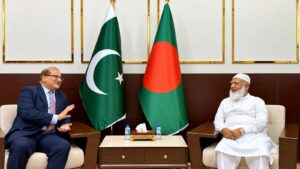
More troubling is the disorder “in royalty”, that is, among those entrusted with authority and privilege. Political polarisation has made governance increasingly adversarial. Instead of institutions functioning with impartiality, they often appear caught in partisan struggles. It all began with the manipulation of mob culture which, patronised by powerful actors, gradually has created a ripple effect and acquired a Frankenstein-like momentum, constantly shattering and overshadowing the rule of law and the constitutional framework under the pretext of ushering in a better and more orderly administration. It was, in truth, the hope of the masses that the promise of a just rule would not go to waste, but that hope has now been squandered.
The educational and cultural sectors are not immune either. Universities meant to be nurtured by critical and creative thinking are increasingly turning into battlegrounds for factional politics. Educational administration remains, to a greater extent, at the mercy of student leaders whose actions often love to cultivate mob cultures. In this regard, the situation has scarcely changed from what was before.
Cultural institutions and practices are now, rightly enough, dominated by the youth, which is a positive sign indeed. Yet, painfully, they often remain oblivious to the truth that without a living sense of the continuum of our secular as well as religious traditions, no culture can sustain itself and no heritage can endure.
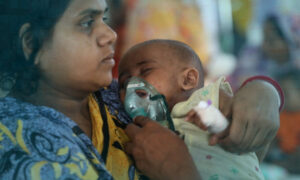
On the other hand, lawmakers are increasingly spending their time debating relatively insignificant issues such as ‘muta marriage’, renaming places according to their own preferences, and pursuing the arrest of activists from banned political parties, instead of addressing the deteriorating law-and-order situation, ensuring the smooth functioning of the state machinery, anarchy on the road, anti-feminist propaganda, child abuse, confronting public health crises such as the deaths of more than six hundred children from measles and their underlying causes, tackling unauthorised land occupation, bribery, corruption, minority issues, an inactive police force, rising poverty and unemployment, and, above all, mob violence. Each day, newspapers carry all kinds of negative and frustrating reports, yet there is scarcely any reaction from the government or, for that matter, the royalty.
Disorder may indeed reign everywhere today from road to royalty. But history reminds us that disorder is never permanent. The responsibility lies with citizens and leaders alike: to restore order not merely as a system of control but as a culture of justice, responsibility and respect. Only then can Bangladesh move from chaos towards a more dignified future.