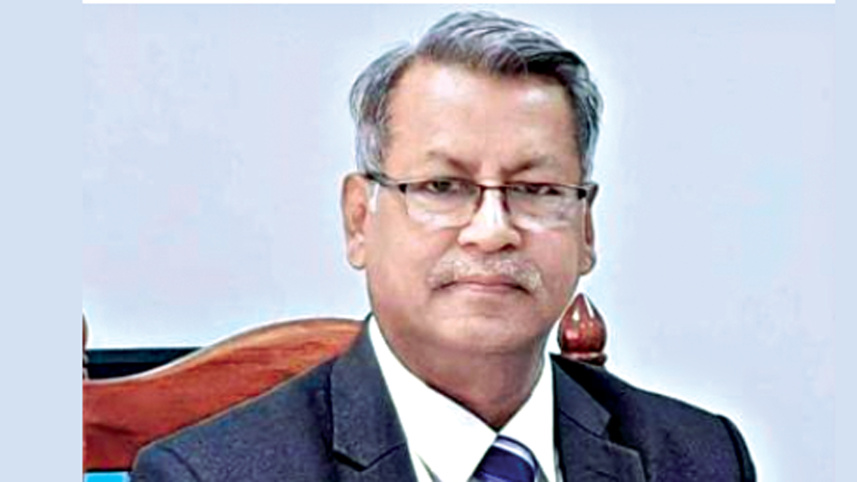
Md Khurshid Alam, the newly appointed chairman of Islami Bank
Bangladesh PLC, faces no barrier to serving as the bank’s chairman due to his
wife’s loan default, said Arief Hossain Khan, executive director and
spokesperson of Bangladesh Bank.
He made the remark amid widespread criticism and controversy surrounding
the appointment of the new chairman of Islami Bank.
The BB spokesperson told The Daily Star that in 2016, a small enterprise
obtained a loan of Tk 1.25 crore from First Security Islami Bank under an SME
financing scheme.
One of the directors of that company is Khurshid Alam’s wife, he said,
adding that the outstanding amount of the loan has now risen to above Tk 3
crore and has become classified as defaulted.
However, since Khurshid Alam has no involvement with that company, there
is no obstacle to his serving as chairman on that account, according to the BB
spokesperson.
The Daily Star has seen a document showing that Khurshid Alam’s wife,
Afroza Akter, is a director of Agrocrop Limited and holds a 16 percent stake in
the company.
The company has loans totaling Tk 3.56 crore from First Security Islami
Bank and Meghna Bank. Of this amount, Tk 2.79 crore has become defaulted, the
document shows.
Under the Bank Company Act (Amendment) 2023, a loan defaulter is not
eligible to serve as a director of a bank.
Bangladesh Bank regulations state that wilful defaulters are ineligible to
serve as directors of a bank for five years, even after being removed from the
default list.
However, the law does not contain any provision regarding a spouse’s loan
default status.
Central bank officials, however, said that if an individual is a guarantor
of his wife’s loan, he would not be eligible to serve as a director.
On May 24 this year, late in the evening, Bangladesh Bank appointed Md
Khurshid Alam, a former deputy governor, as chairman of Islami Bank, hours
after the previous chairman resigned.
The appointment was made a day before the country entered a nearly
week-long Eid holiday.
Alam was among the top BB officials who were forced to leave the central
bank by more than a hundred protesting officials on August 6, a day after the
fall of the Sheikh Hasina-led government following a popular uprising in July
2024.
The appointment of Alam sparked widespread discussion in the banking
sector. Many alleged that his role was controversial during the tenure of the
Awami League government, when S Alam, a Chattogram-based businessman, took
control of a number of Shariah-based banks and was involved in loan
irregularities.